




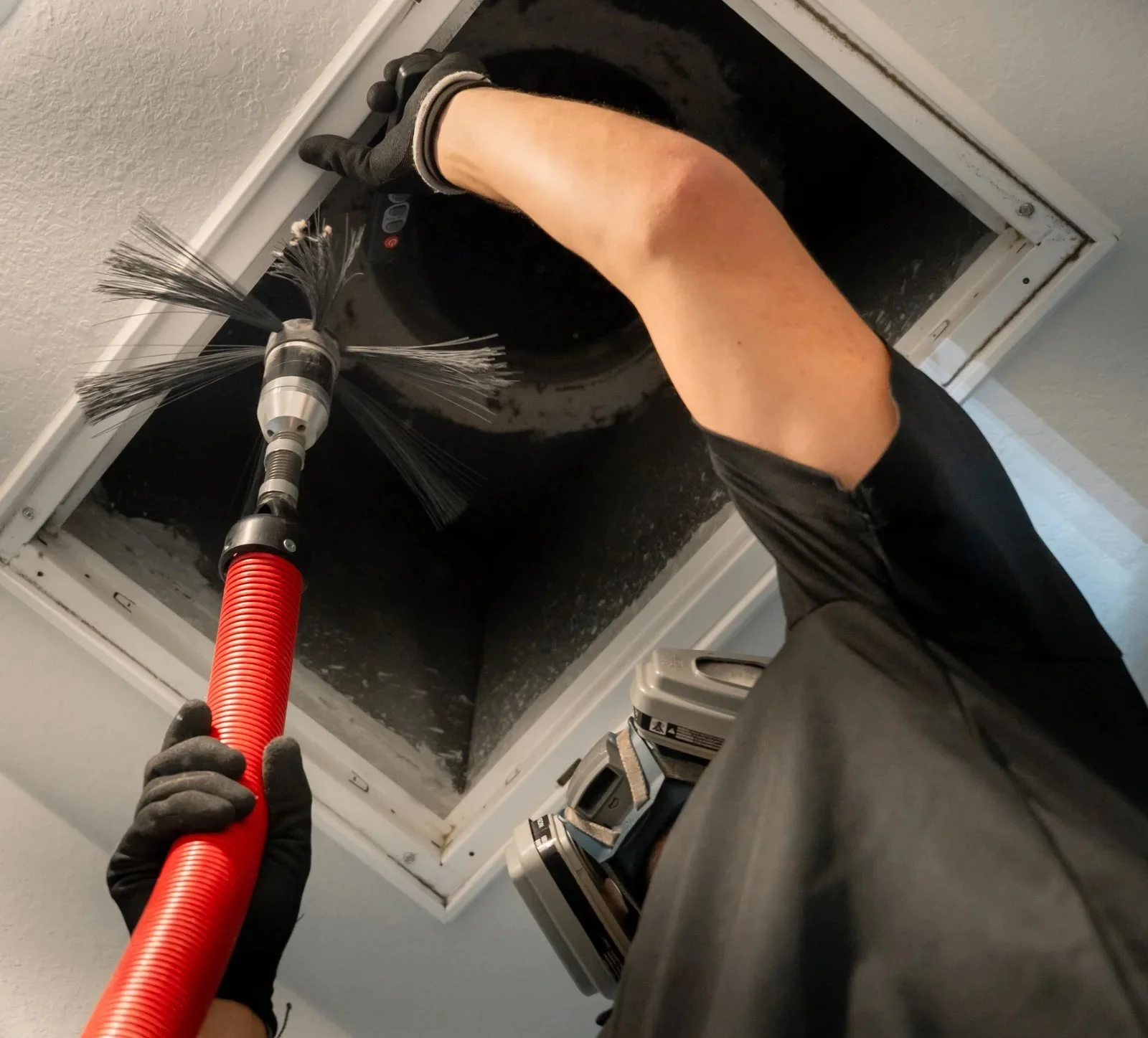
A furnace depends on steady airflow to heat a home effectively. When supply vents, return grilles, or sections of ductwork become blocked or restricted, the system may have difficulty moving enough air through the home. The result can include uneven temperatures, longer heating cycles, increased energy consumption, and additional stress on furnace components. Research on HVAC airflow confirms that restrictions anywhere along the air path can reduce system performance and increase static pressure.
For Orange County homeowners, understanding these airflow problems can make it easier to recognize developing furnace issues and determine when professional service may be necessary.
Understanding the Furnace Airflow Cycle
A typical forced-air furnace works as part of a continuous airflow system. Return grilles bring indoor air back toward the furnace, where the air passes through a filter and over the heating components. The blower then pushes the heated air through supply ducts and out through registers throughout the home.
Every part of this pathway affects overall performance. If one section becomes restricted, the blower must work against greater resistance. Research from the U.S. Department of Energy notes that increased static pressure can reduce airflow in many HVAC systems, while variable-speed blowers may consume additional power while attempting to maintain airflow.
How Blocked Supply Vents Affect Furnace Performance
Supply vents need to remain open and unobstructed so heated air can enter rooms properly. Furniture, rugs, curtains, storage items, or closed register dampers can interfere with airflow.
Blocking several supply vents can increase pressure within the duct system. Instead of allowing heated air to distribute normally, the furnace may face greater resistance as it attempts to move air through the remaining openings. This can contribute to poor comfort and unnecessary equipment strain.
Homeowners should check that registers are fully open and that furniture or other objects are not covering them.
Why Blocked Return Vents Can Be More Serious
Return vents perform a different function from supply registers. They pull air from the living space back toward the furnace. If a return grille is covered by furniture, curtains, boxes, or other objects, the furnace may not receive enough air.
A restricted return pathway can affect airflow throughout the entire home rather than just one room. When every supply vent seems weaker than normal, the return side of the system is one of the areas worth investigating.
Restricted Ductwork Can Create Uneven Heating
Ductwork can become restricted for several reasons. Flexible ducts may become crushed or kinked, dampers can remain partially closed, and sections of ductwork can become disconnected or damaged. Leaks can also prevent heated air from reaching its intended destination.
If only one or two rooms have noticeably weak airflow while other areas remain comfortable, the problem may be isolated to a particular branch duct. If airflow is weak throughout the property, the restriction may be closer to the furnace, such as the filter, return pathway, blower, or main duct system.
Increased Static Pressure and Furnace Strain
Static pressure describes resistance to airflow within the HVAC system. When vents or ducts are restricted, static pressure can increase.
High pressure can cause a furnace blower to work harder. Depending on the equipment, this may reduce airflow, increase electrical consumption, or place additional stress on blower components. Building-science guidance also notes that excessive pressure drop can contribute to furnace overheating and blower problems.
This is one reason simply turning up the blower or repeatedly adjusting the thermostat may not solve an airflow problem. The restriction itself needs to be identified.
Signs Your Furnace May Have an Airflow Restriction
Orange County homeowners can watch for several warning signs, including:
- Weak airflow from multiple supply registers
- One room receiving substantially less heat than others
- Longer furnace operating cycles
- Rooms that remain cold despite the thermostat setting
- Unusual whistling or rushing sounds around vents
- A furnace that repeatedly starts and stops
- Increasing heating costs without an obvious change in usage
- Airflow that becomes weaker over time
These symptoms do not automatically prove that blocked ductwork is responsible. Dirty filters, blower problems, equipment issues, and other HVAC faults can create similar symptoms, so proper diagnosis is important.
The Connection Between Dirty Filters and Blocked Ducts
Air filters are another important part of the airflow pathway. As filters collect dust and particles, their resistance to airflow can increase. The U.S. Environmental Protection Agency notes that filter pressure drop generally increases as filter media becomes loaded, and filter selection should be compatible with the HVAC system to avoid unnecessarily restricting airflow.
Homeowners should use the filter type and size recommended for their particular furnace rather than automatically choosing the most restrictive filter available.
Why Ignoring Airflow Problems Can Lead to Repairs
An airflow restriction is not simply a comfort problem. If the furnace continually operates under abnormal airflow conditions, components may experience additional stress.
For example, insufficient airflow can contribute to overheating in certain furnace systems. A safety limit may shut the burners down when temperatures become excessive, potentially producing repeated cycling and reduced heating performance.
When persistent airflow problems occur, professional furnace repair Orange County services can help determine whether the underlying cause is a blocked register, restricted return, damaged duct, dirty filter, blower issue, or another system problem.
What Homeowners Can Safely Check
There are several basic checks homeowners can perform without opening the furnace cabinet or working with gas or electrical components.
Start by examining every supply and return grille. Make sure furniture and other objects are not blocking them. Check that accessible registers are open and inspect the furnace filter for visible dirt.
It can also help to compare airflow between different rooms. If one register has dramatically weaker airflow than similar registers, there may be a localized duct or register issue. If every register is weak, the problem may involve a shared component of the system.
Avoid removing furnace panels or attempting repairs involving burners, wiring, or internal furnace components unless you are qualified to perform that work.
When Professional Inspection Makes Sense
Professional evaluation becomes particularly useful when basic checks do not restore normal airflow. A technician can inspect accessible ductwork, evaluate the blower, check filters and other restrictions, and measure system pressure when appropriate.
Airflow testing can help distinguish between a duct restriction and an equipment problem. Rather than replacing parts based solely on symptoms, technicians can use measurements and inspection to identify where the airflow is being lost or restricted.
Keeping Vents and Ducts Clear
Preventive maintenance can reduce many common airflow problems. Keep supply and return registers unobstructed, replace filters according to the manufacturer’s recommendations, and pay attention to changes in airflow.
During routine HVAC service, duct connections and accessible components can also be inspected for obvious damage or restrictions. Early attention can prevent a minor airflow issue from developing into a larger heating-performance problem.
Final Thoughts
Blocked vents and restricted ducts can have a significant effect on furnace performance. They can reduce airflow, increase system resistance, create uneven heating, and potentially place additional stress on furnace components. Identifying the problem early is often easier and less disruptive than waiting until the furnace stops heating properly.
For Orange County homeowners, paying attention to airflow throughout the home is an important part of maintaining a dependable heating system. When weak airflow continues after basic checks, professional diagnosis can determine whether the issue lies with the vents, ductwork, filter, blower, or furnace itself.