




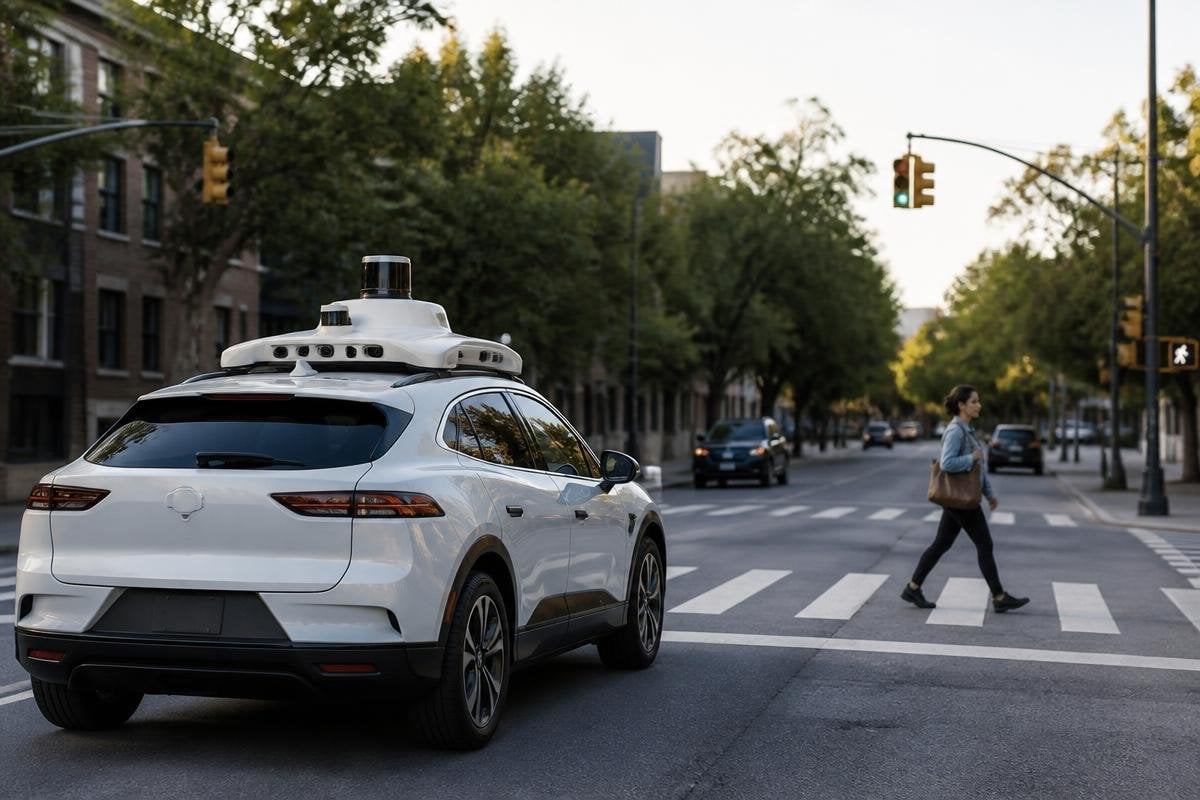
An autonomous vehicle can react to objects, lane markings, and traffic signals without a person steering every second. That could reduce some mistakes, but safer roads depend on how the system behaves when its sensors lose sight of the scene or the software meets something it has not handled before.
- Automated driving can reduce risks linked to distraction and fatigue.
- Sensors need clear views of roads, people, vehicles, and signs.
- Human handover remains a serious safety problem.
Where automation can help
An automated system can watch the road without texting, looking away, or becoming tired. It can also keep checking nearby traffic as the vehicle travels, which gives it a chance to respond to a person crossing the road or a vehicle changing lanes.
That benefit depends on the system reading the scene correctly. Cameras, radar, and lidar each gather different information. Cameras can read lane markings and signs, radar can measure distance and movement, and lidar can map nearby objects with light pulses. Software combines those inputs before setting a path and a speed.
The vehicle still needs a clear rule for each situation. A marked lane on a dry road is easier to handle than a temporary lane beside road work, where cones, signs, workers, and old markings may appear together. The safer choice comes from the full system, not from one sensor or one automated feature.
The road is part of the system
A vehicle may work well on roads with clear markings and predictable traffic, then need help on roads with poor paint, blocked signs, heavy rain, or unusual traffic control. Road design also affects what the sensors can see and how much time the software has to react.
This makes the safety question more specific than “Can the vehicle operate?” A better test asks where it can operate, in what weather, at what speed, and with what level of human supervision. Those limits should be clear before a person buys or boards the vehicle.
For a buyer or transport operator, Robot24.com’s robotics coverage can put named vehicle trials and operator limits beside these questions. The next issue is handover, when a person must take control at a boundary.
The handover problem
Many systems still depend on a human taking control when the vehicle reaches a situation outside its approved operating area. That handover can fail if the person has been watching an automated system for a long time and needs to understand the road in a few seconds.
A warning alone doesn’t solve that problem. The vehicle needs to give the driver enough time, explain why help is needed, and keep the situation stable during the change. The driver also needs a clear view of the road and a role they can perform safely.
This is where the promise of safer roads becomes harder to prove. A system that handles routine travel but gives poor warnings can replace constant steering with rare, difficult interventions. I’d judge an autonomous vehicle by those handovers before trusting its smoothest demo.
What remains unproven
A safety claim needs a clear comparison. Is the vehicle being measured against a careful driver, a tired driver, or a distracted one? Does the test cover an empty road, a busy city street, or a work zone? Without those details, “safer” has no fixed meaning.
Manufacturers also need to show how the vehicle deals with failures. A blocked camera, a dirty sensor, a lost map connection, or a software fault can change what the vehicle knows.
The system should detect the problem, reduce speed or stop in a safe place, and tell the person inside what happened. Public roads add cases that a test track may miss, such as a cyclist changing direction or a pedestrian stepping from behind a parked vehicle.
A police officer or road worker can also give instructions that differ from the normal traffic signals. These situations need testing in the places where the vehicle is meant to operate.
A practical safety check
Before treating an autonomous vehicle as safer, check:
- Operating area: Which roads, lanes, weather conditions, and speeds does the system support?
- Human role: Must a person watch the road, or can the vehicle operate without supervision?
- Handover time: How much warning does the system give when it needs help?
- Failure response: What happens after a sensor fault, software error, or lost connection?
- Evidence: Are results tied to named test conditions and a clear comparison?
These questions turn a broad safety claim into a list you can inspect. They also show why a vehicle that operates well in one place may not be ready for every road.
Autonomous vehicles can reduce some errors made by people, but safer roads will depend on verified limits, clear handovers, and failure tests that match public streets. Until those details are available for a specific vehicle and operating area, treat automation as a tool with a defined job, not as a substitute for judgment everywhere.